Blog.4 The development of my future leadership brand

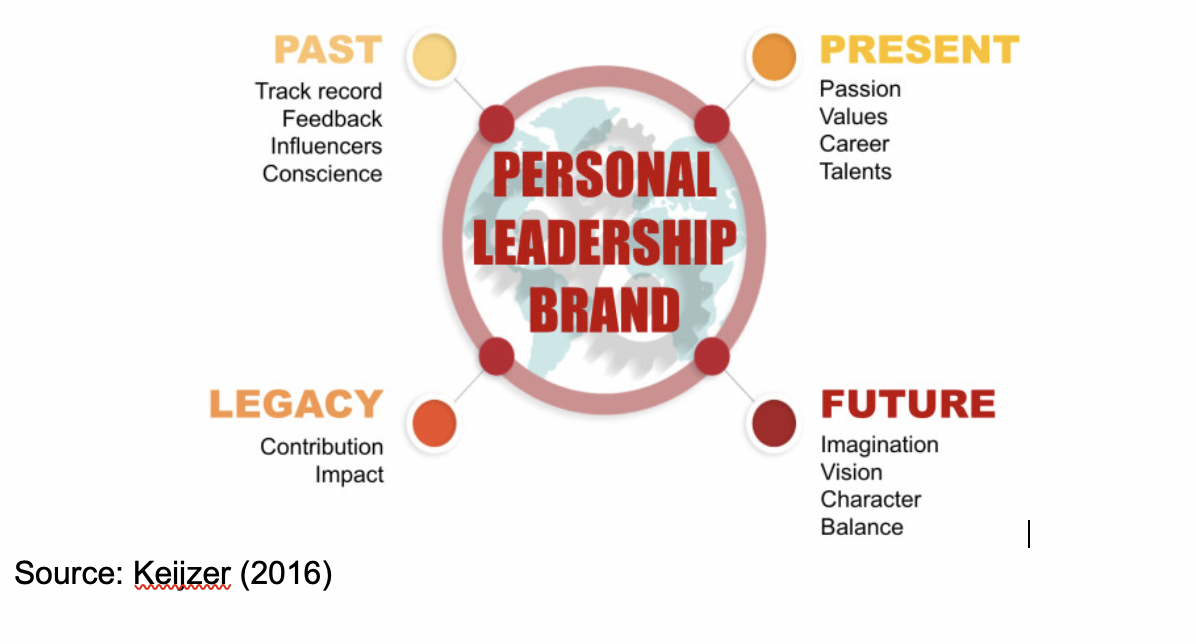
Figure 1: How to Create a Leadership Brand Based on Your Legacy
1. Background

By integrating brand concept and applying it to leadership, this creates the leadership brand by the way an effective leader would behave, react, and interact (Aaker & Joachimsthaler, 2012).  In this way, the leadership brand would be rooted in the past which is based on what drive the leader today, aiming at the contribution the leader would like to make and leaving behind the great legacy (Keijzer, 2016).

2. Appraise the leadership brand

Academically, leadership brand is all about the leadership capability within the organisation in converting external customer and investor expectations into employee abilities and organisation capabilities (Ulrich & Smallwood, 2007; Ulrich & Dulebohn, 2015; Leskiw & Singh, 2007; Aaker & Joachimsthaler, 2012).  This is in contrast with the conventional leadership style which is about the individual leader affecting on what happens inside an organisation (Goleman, 2003).  Hence, leadership brand can effectively guarantee that all business activities within an organisation as well as support the corporate brand, and in turn assist the leaders to develop leadership visions, missions, value, and personal intention and develop their own leadership brand (Aaker & Joachimsthaler, 2012; Ulrich & Smallwood, 2007).

In my situation, I have chosen to explore the situational leadership theory proposed by Hersey & Blanchard (1997) explaining that the effectiveness of leadership would depend on how the followers would accept the leader. Leadership situation changes with the followers’ ability and willingness to work(Grover & Walker, 2003).  According to Bjugstad et al., (2006), it is critical that effective leadership should focus on the followers and use the appropriate leadership style based on the followers’ characteristics. Hersey & Blanchard (1997) categorised leadership style based on task and relationship behaviours into 4 distinct types namely, selling, participating, delegating, and telling leadership style (see Figure 2).

Figure 2: Situational Leadership Style and its categorization (Hersey & Blanchard, 1997)
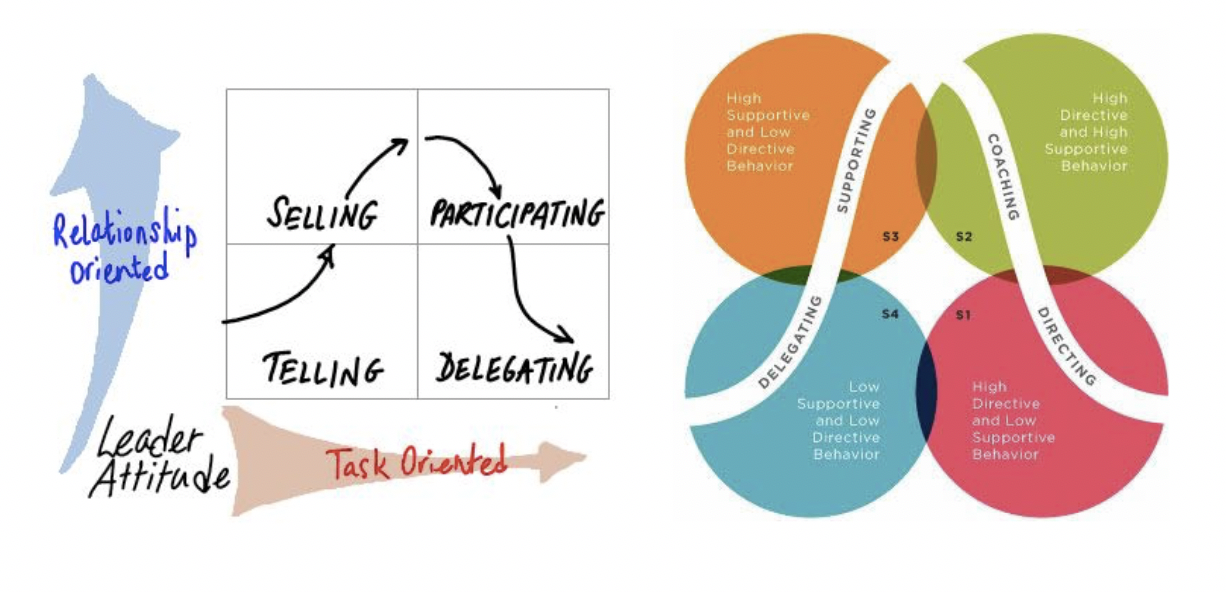
Based on Hersey & Blanchard (1997) situational leadership style shown in Figure 2, I recognise that my leadership ability is not apparent nor effective to my team members due to my lack of experience.  Moreover, the difference in background, cultural norms, and characteristics of individual members have made it every more difficult to be accepted. Hence, I have adopted the participating style in order to complete the assigned tasks when working in a team. In other word, my leadership brand is still very weak and needed to be developed towards maturity before finding the appropriate leadership style to suit my personality.

3. Assess the relevance of my leadership brand to chosen career

I have decided to further my study straight after completing my first degree in Entrepreneur Economics, so it is very difficult to justify my leadership brand. However, I have been working in several teams during my final year of study, and I have always been willing to accept the given tasks and manage to complete on time.  Given that all my fellow students came from the similar background and cultural norms, so every team member is happy to work in harmony with minimum disagreement leading to conflict (Forsyth, 2018).  Furthermore, we were communicating in the same language so this does not become a barrier of restriction in hindering the task (Forsyth, 2018).  Therefore, it is right to say that my leadership brand will be towards participating style until I can acquire more experience.

4. Evaluate my current strengths and development needs

Based on my personal evaluation since joining Coventry, I have improved my communication skills especially English skill which helps me to establish a good relationship with other team members.  Moreover, I can complete the assigned task on time.  As my English skill improved, I become more confidence and willing to express my opinion and contribution to the team.  Hopefully, my personal leadership brand will develop towards the right career path.

5. Create a development plan

My future development plan is to improve my communication and English skills so that I am able to exchange ideas, voice my opinion, and establish good relationships with my team members.  With confidence gained, I will be able to develop execution skills, social skills with high emotional intelligence and others.  As a consequent, I will develop my personal leadership brand that can best suit my personality and beneficial for my future career path.

References:

Aaker, D. A., & Joachimsthaler, E. (2012). Brand leadership. Simon and Schuster.

Bjugstad, K., Thach, E. C., Thompson, K. J., & Morris, A. (2006). A fresh look at followership: A model for matching followership and leadership styles. Journal of Behavioural and Applied Management7(3), 304.

Forsyth, D. R. (2018). Group dynamics. Cengage Learning.

Goleman, D. (2003). What makes a leader. Organizational influence processes82, 229-241.

Grover, R. A., & Walker, H. F. (2003). Changing from production to quality: Application of the situational leadership trans theoretical change models. Quality management journal10(3), 8-24.

Hersey, P., & Blanchard, K. H. (1997). Situational leadership. In DEAN’S FORUM (Vol. 12, No. 2, p. 5).

Keijzer, P. (2016). “How to Create a Leadership Brand Based on Your Legacy” [online] Available at: https://www.business2community.com/leadership/create-leadership-brand-based-legacy-01459400 [Accessed 25 Jun. 2019].

Leskiw, S. L., & Singh, P. (2007). Leadership development: learning from best practices. Leadership & Organization Development Journal28(5), 444-464.

Ulrich, D., & Dulebohn, J. H. (2015). Are we there yet? What’s next for HR? Human Resource Management Review25(2), 188-204.

Ulrich, D., & Smallwood, N. (2007). Building a leadership brand. Harvard Business Review85(7/8), 92.

Blog.3 Management Change

1. Background

Companies operating in the UK have been preparing themselves to face with the eminent changes creating unique challenges and opportunities since the referendum (Tarasanski, 2017). This blog will examine how Marks and Spencer(M&S), a popular British company in the UK utilizes change management in revising its marketing strategy to maintain competitiveness. 

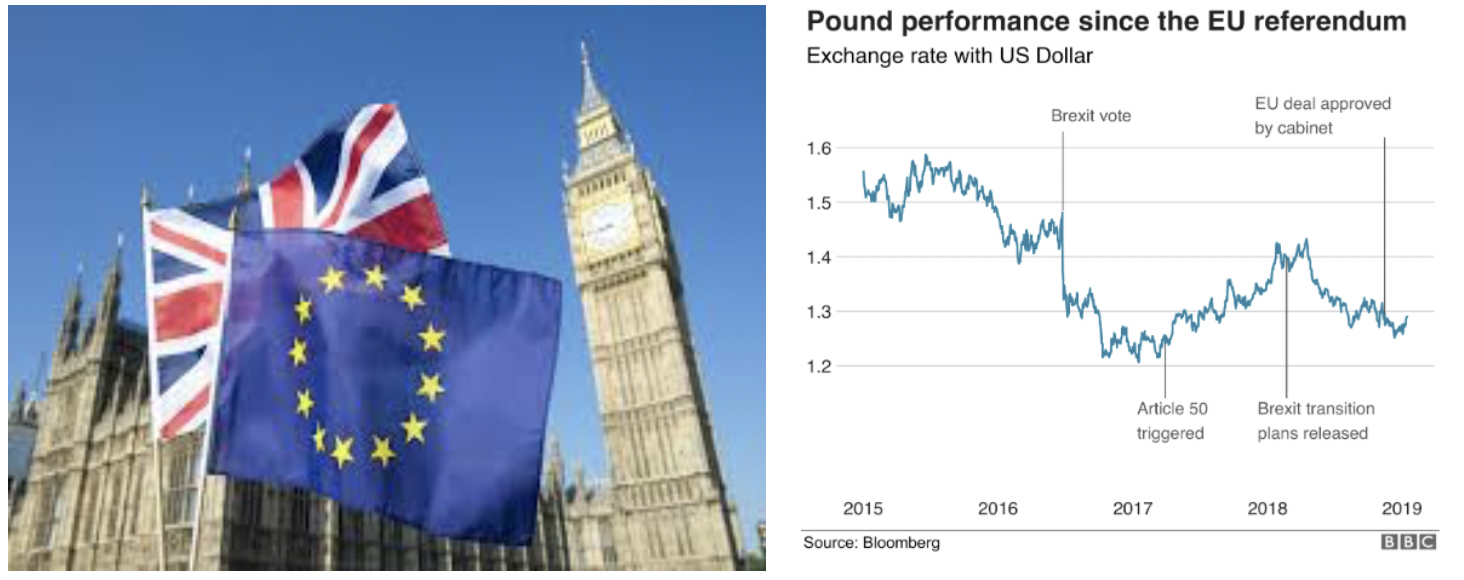
Figure 2: Pound Performance since the EU Referendum

Since the decision to leave EU on 23 June 2016, the discussion on the withdrawal agreement has become an endless process (Wheeler et al., 2019).  Currently, there is no deal being made, causing the delay in the departure date resulting in the UK prime minister, Theresa May to resign on 6 June 2019.  The new deadline is scheduled for 31 October 2019, but the UK can leave before if the new prime minister can somehow get the deal approved by Parliament and preventing hard Brexit (BBC News, 2019).  

During such period, the pound has had a rough time when it comes to its price against the dollar and other currencies.  Immediately after the referendum, Figure 1 shows how the pound declined sharply in value, and further volatility is expected (Mustoe, 2019).  Holidays and imported goods have become more expensive, but UK exports have been cheaper. M&S has been affected by this since they have to buy raw materials from abroad causing its sales of products to fall sharply (Tarasanski, 2017).

2. Change management Framework

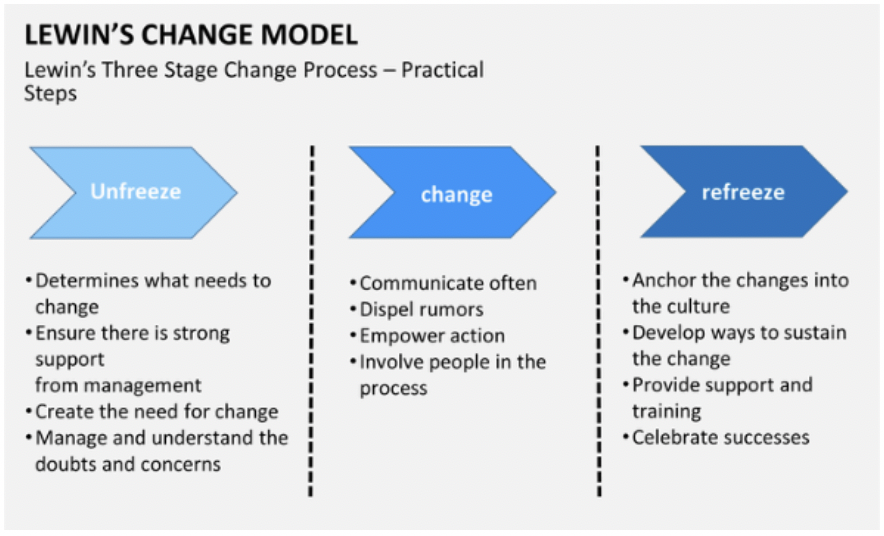
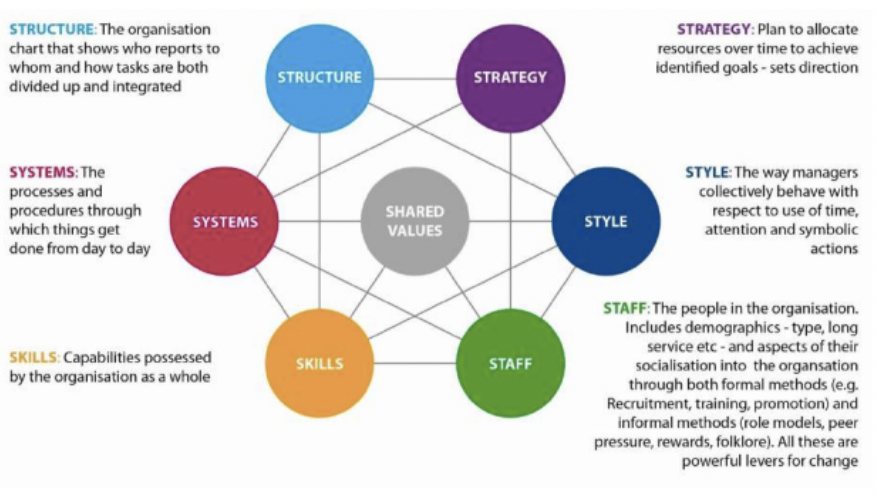
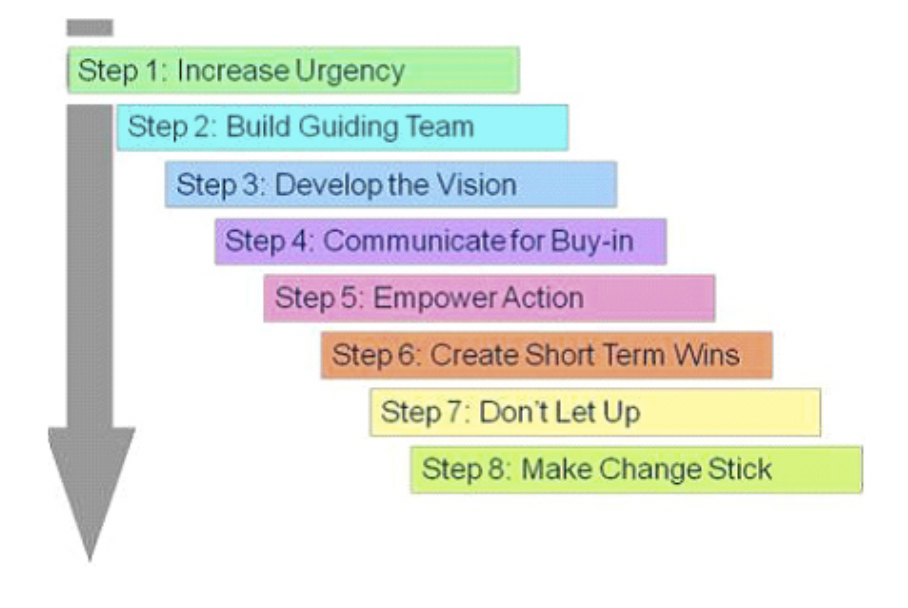
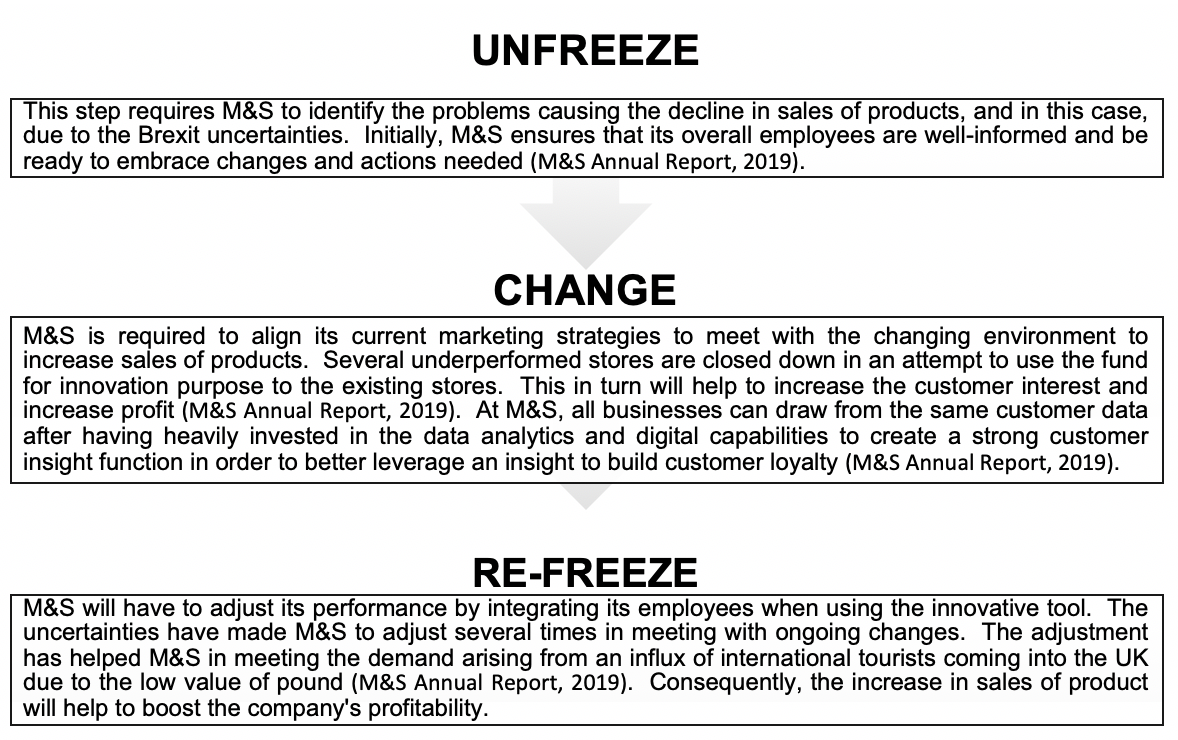
Currently, there are several change management frameworks that can be used to explain how companies can adapt and adjust its marketing strategies, and operations to increase its performance and profitability (Cameron & Green, 2015). The well-known change models include Lewin model (Lewin, 1951), McKinsey 7’s model (Baldwin et al., 2012), and Kotler 8’s step change model (Kotler, 1996) –all of which can be used to develop and modify marketing strategies to meet with the ongoing changes (see Figure 2, 3, and 4).

Figure 3: Lewin’s Change Model (Lewin, 1951)

Figure 4: McKinsey 7’s model (Baldwin et al., 2012)

Figure 5: Kotler 8’s step change model (Kotler, 1996)

From above, change management processes involve change in operations, and the adaptation can become a challenge for companies and taking time for the strategic implementation to be effective (Kotter & Schlesinger, 1979).  Nevertheless, the change model can be used as a guideline for a company to adjust and follow and be beneficial in the long-term (Cameron & Green, 2015).  Lewin change model is appropriate for M&S in adjusting to changes in strategies and operations (see Figure 2).

3. Choose

M&S is a British retailer with a unique heritage of brand values in the UK and International, with over 1,380 stores around the world.  M&S is engaged in delivering own brand food, clothing and home products in its stores and online globally (M&S Annual Report, 2019).  M&S operates as a family of accountable businesses, bound together not only by a common consumer brand but also by shared sites, employment values and customer data.  Currently, there are over 8000 employees working for M&S (M&S Annual Report, 2019), and both revenues and operating profit for March 2019 show a slight decrease from the previous year.

After the referendum, M&S is forced to shut down 14 stores and 100 more by 2022 (Wood & Butler, 2018).  Given that most of M&S’s revenues came from the UK market (M&S Annual Report, 2019), the sales of products drastically declined by 8.9% within three months after the announcement of Brexit referendum (Jarvis, 2016).  The company also experienced an increase in debt due to the decline in the sales (Jarvis, 2016).

4. Develop a solution to the problem and an action plan

Challenge

To be operative and overcoming the declining value of pound, M&S aims to close down underperformed stores in order to use the fund for investing through innovation with other stores that can still generate revenues and profits for the company (Thompson & McLarney, 2017).

Action Plan 

By adopting the Lewin change model, M&S’s first priority is to maintain its sales of products by lowering the price, and running various promotional campaigns for both online and in-store, and consequently capturing more customers (M&S Annual Report, 2019).  

5. Outcome

Despite the ongoing turbulent arising from Brexit uncertainties, M&S has taken some drastic measurement by closing down number of underperformed stores in order to use the fund for investing in innovation of other existing stores. This is done in conjunction with lowering prices, running several promotional campaigns, and heavily investing and upgrading its innovative tools, but there are other unforeseen factors to be considered.  For the time being, M&S can still be in operation as evident from Lewin Change model to maintain its sales and profits.

References

Baldwin, R., Cave, M., & Lodge, M. (2012). Understanding regulation: theory, strategy, and practice. Oxford University Press on Demand.

Cameron, E., & Green, M. (2015). Making sense of change management: A complete guide to the models, tools and techniques of organizational change. Kogan Page Publishers.

Jarvis, P. (2016). Marks and Spencer sales slumped before the Brexit vote. [online] The Independent. Available at: https://www.independent.co.uk/news/business/news/marks-and-spencer-sales-food-brexit-eu-referendum-marc-bolland-a7124336.html [Accessed 24 Jun. 2019].

Kotter, J. P. (1996). Leading change. Harvard business press.

Kotter, J. P., & Schlesinger, L. A. (1979). Choosing strategies for change (pp. 106-114). Harvard Business Review.

Lewin K. (1951). Field theory in social science. New York: Harper & Row.

M&S Annual Report (2019). [online] Corporate.marksandspencer.com. Available at: https://corporate.marksandspencer.com/documents/msar-2019/full-annual-report.pdf [Accessed 24 Jun. 2019].

Mustoe, H. (2019). How does Brexit affect the pound?[online] BBC News. Available at: https://www.bbc.com/news/business-46862790 [Accessed 24 Jun. 2019].

Tarasanski, P. (2017). Brexit: Changing Dynamics of Corporate Financial Risks, Return, and Performance: Case Companies: BP, Royal Bank of Scotland, Marks & Spencer, GlaxoSmithKline, EasyJet.

Thompson, J., & McLarney, C. (2017). What effects will the strategy changes undertaken by next Plc have on themselves and their competition in the UK Clothing Retail Market? Journal of Commerce and Management Thought8(2), 234.

Wheeler, B., Seddon, P. and Morris, R. (2019). Brexit: All you need to know. [online] BBC News. Available at: https://www.bbc.com/news/uk-politics-32810887 [Accessed 24 Jun. 2019].

Wood, Z. and Butler, S. (2018). Marks & Spencer to close 100-plus stores by 2022 in ‘radical’ plan. [online] the Guardian. Available at: https://www.theguardian.com/business/2018/may/22/marks-spencer-close-stores [Accessed 24 Jun. 2019].

BBC News (2019). New Brexit deadline set for 31 October. [online] BBC News. Available at: https://www.bbc.com/news/uk-politics-47889404 [Accessed 24 Jun. 2019].

Websites

https://www.ft.com/content/cf51e840-7147-11e7-93ff-99f383b09ff9

https://www.bbc.com/news/business-46862790

https://www.reuters.com/finance/stocks/overview/MKS.L

BLOG 2: Contemporary Leadership Styles: How relevant are they in today’s changing world?

1. Background

This blog will use Sainsbury’s as a case study in showing how contemporary leadership style has been applied with respect to today’s changing world which has evolved rapidly in the last few decades.  According to Daft & Marcic (2016), such accelerated pace cannot be handled by traditional management concepts, since the changes have made the modern organizational structures and systems to be very dynamic in the new conditions. Sainsbury’s is well-known to have a leadership style to be very laid back by their attitude and this failed to challenge or motivate the employees (Craven et al., 2018).  

2. Describe: Leadership and Learning Organisation (LO)

Leadership theory integrates both behavioural and contingency theory, along with path goal and situational approach (McCleskey, 2014).  Contemporary leadership theory explains the work that emerged through the post-industrial paradigm whilst the situational leadership becomes an ethical process that emphasised on moral and end value commitment (McCleskey, 2014).  The main responsibility of the leader is to develop its subordinates for enhancing the company performance.  In coping with ongoing rapid changes, the outcome from the integration of the evolution of leadership theory and the contemporary view is found to be based on value, complexity, and direction towards achieving the business goal (McCleskey, 2014). 

Source: http://www.maurilioamorim.com/2014/04/learning-vs-arrogant-organizations-a-lesson-in-survival/

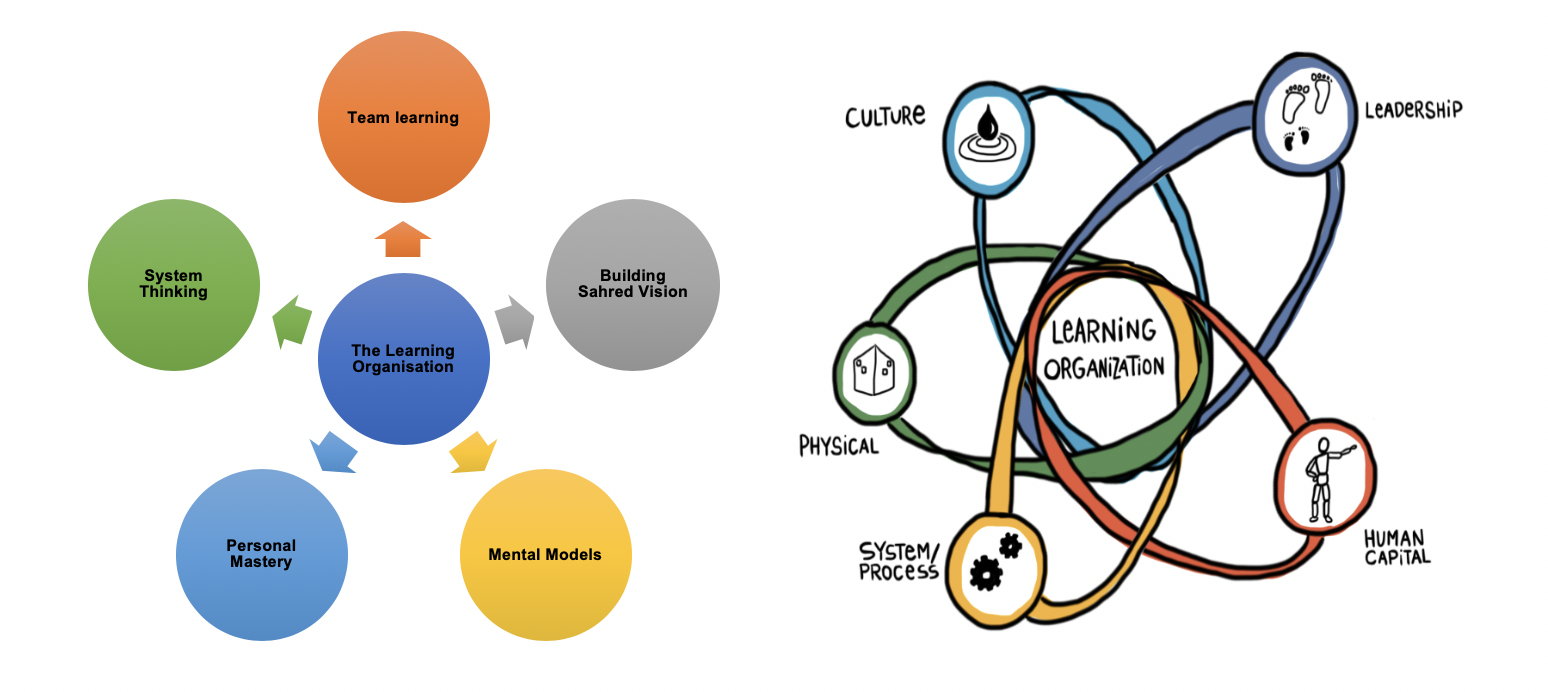
This blog will demonstrate that a good leadership style irrespective of being masculine or feminine base, must be able to handle the company as being the learning organisation to be effective. According to Kerman et al. (2012), learning organisation describes the company as the ideal environment for learning and fine-tuned with the business goals.  The characteristics of company as a learning organisation is shown in Figure 1. Hence, the employees can quickly increase their capacity for creating the desired outcome beneficial to the company through an effective contemporary leadership style. 

Figure 1: Characteristics of company as a learning organisation 

Source: https://muhammadirfan08.files.wordpress.com/2014/09/learning-organization.jpg

3. Use relevant example: Sainsbury’s As a Learning Organization and The Role of Leadership

Sainsbury’s holds the clear vision to become the most trusted supermarket that can attract potential employees (Karim et al., 2012).  Sainsbury’sheritage can be traced back since it first operated in 1865 and is considered the company’s core value (Craven et al., 2018).  Most potential employees would think of Sainsbury’s as a good workplace that can nourish by applying learning and development at the activities for achieving and meeting its vision (Karim et al., 2012).  At Sainsbury’s, the training process was set up to ensure the highest employee standards by including material for learning, experience of training, assessment and finally taking the learner’s feedback.

4. Use relevant example: Sainsbury’s Authentic Leadership and Ethics

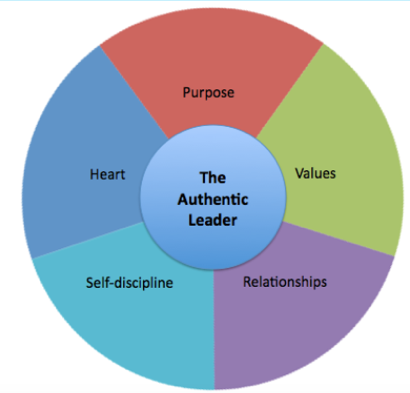
Authentic leadership is a type of management style in which people act in a real, genuine and sincere way that is true to who they are as individuals (Avolio & Gardner, 2005).  Authentic leaders try to integrate and are committed towards the core ethical and moral values for effective outcome in the long-run with other characteristics shown in Figure 2.

Figure 2: The Authentic Leadership Diagram

Source: https://infograph.venngage.com/p/86148/5-characteristics-of-authentic-leadership

Figure 2 shows that the authentic leaders attempt to develop the motivational ethical behaviour in the employees through displaying values, good behaviours and attitudes by the leaders.  In this way, the authentic leadership style is similar to the ethical leadership style as defined by Northouse (2018) by showing morals and values in a management system through upholding more principles in the day-to-day business operations and decisions (Ferrell & Fraedrich, 2015). 

As mentioned earlier, it is shown that Sainsbury’s leadership resembles in certain aspects of the authentic leadership.  At Sainsbury’s, it is possible for work to be completed and provide employees with their satisfaction.  This reflects the self-awareness element of authentic leadership.  However, the interpersonal dimensions reflect the unethical behaviour.  It follows that the leadership style adopted by Sainsbury’s follows the approach towards the manager as arrogant, and the employees are pushed to their limits.

5. Discussion

It is demonstrated thatSainsbury’s has been a learning organisation and willing to adapt different contemporary leadership styles to today’s changing world.  Good and effective contemporary leadership style is fundamental to organizational learning. Learning is the only sustainable method of achieving competitive advantage for contemporary organizations including Sainsbury’s because of rapidly changing of both macro and micro environmental forces. It is vital for all organisation through good and effective leadership to have an impulse to learn and be imprinted amongst their employees.


References

Avolio, B. J., & Gardner, W. L. (2005). Authentic leadership development: Getting to the root of positive forms of leadership. The leadership quarterly16(3), 315-338.

Craven, N., Patterson, S. and Forsyth, L. (2018). Supermarkets Asda and Sainsbury’s ‘in talks’ over merger. [online] Mail Online. Available at: https://www.dailymail.co.uk/news/article-5668707/Supermarkets-Asda-Sainsburys-talks-merger.html [Accessed 28 May 2019].

Daft, R. L., & Marcic, D. (2016). Understanding management. Nelson Education.

Fearne, A., & Hughes, D. (1999). Success factors in the fresh produce supply chain: insights from the UK. Supply chain management: an international journal4(3), 120-131.

Ferrell, O. C., & Fraedrich, J. (2015). Business ethics: Ethical decision making & cases. Nelson Education.

Karim, M. R., Huda, K. N., & Khan, R. S. (2012). Significance of training and post training evaluation for employee effectiveness: An empirical study on Sainsbury’s Supermarket Ltd, UK. International Journal of Business and Management7(18), 141.

Kerman, B., Freundlich, M., Lee, J. M., & Brenner, E. (2012). Learning while doing in the human services: Becoming a learning organization through organizational change. Administration in Social Work36(3), 234-257.

McCleskey, J. A. (2014). Situational, transformational, and transactional leadership and leadership development. Journal of Business Studies Quarterly5(4), 117.

Northouse, P. G. (2018). Leadership: Theory and practice. Sage publications.

BLOG 1: Can cultures be managed with organizations?

Source: http://dnabehavior.com/blogbeta1/10-ways-to-cultural-change/

1. Introduction

Source: https://www.sainsburys.co.uk/

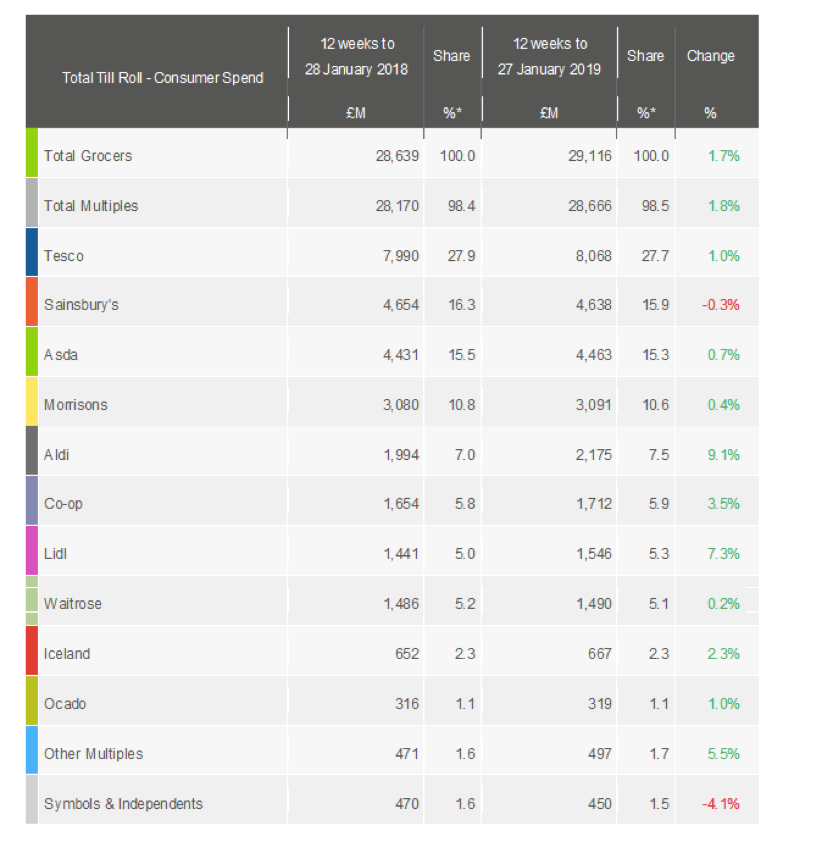
In the first blog, I am asked to provide an explanation on how cultures can be managed within the organizations.  I hope that I can gain an insight and enhance my knowledge to become a good and effective leader in the future.  I will be using Sainsbury’s, the second largest supermarket in the UK with 16.3% of market share (after Tesco 27.9%, and Asda 15.5%) to illustrate how cultures can be managed within the organizations (Figure 1). 

Figure 1: Big Four Supermarkets Start 2019

source: https://www.kamcity.com/namnews/uk-and-ireland/supermarkets/big-four-supermarkets-start-2019-with-further-market-share-loses/

2. The principal challenges that an organisation faces

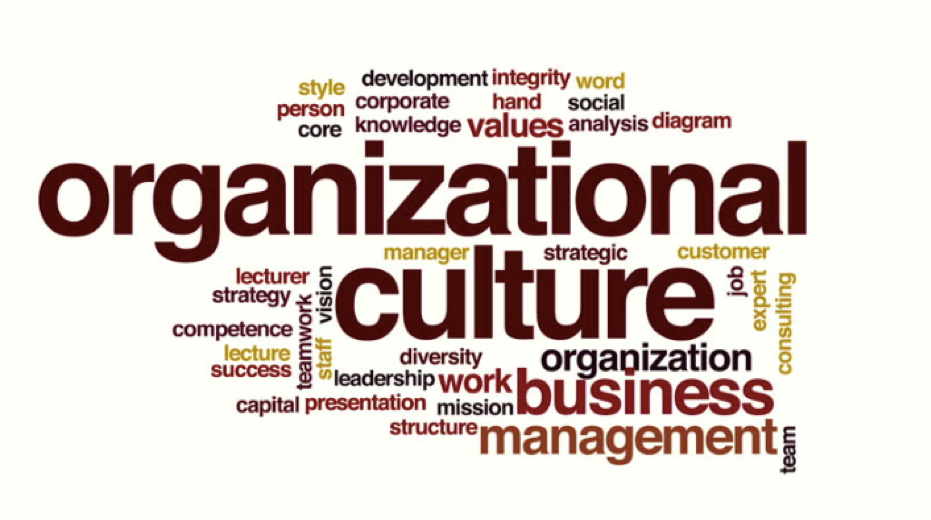
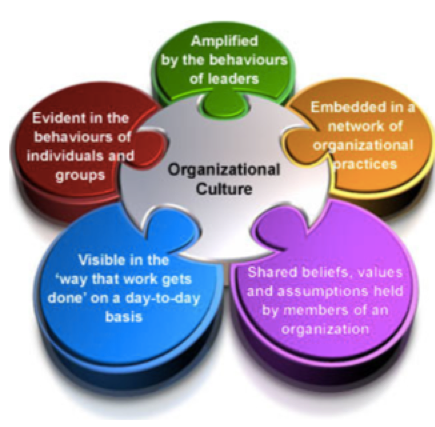
Organisational culture has been defined differently in several academic literatures (Deshpande & Webster Jr, 1989). I have chosen the definition given by Sagiv & Schwartz (2007) mentioning organisational culture as the shared insights of organizational workplace within the organisational units.  This is supported by McNamara (1999) that this is the organization’s personality in which culture is comprised of the assumptions, values, norms, and tangible signs of a company’s employees and their behaviour.  According to Hofstede (1994), culture is the collective programming of the mind which differentiates the member of one group or category of people from another.  In other word, culture is the consistent, behavioural patterns which are unique to a specific group.  This can be summarised in Figure 2 below.

Figure 2: Organisational culture in an organisation

Each organization has a life of its own and often like puzzles compromised of varied little pieces that act as a whole.

3. Implementing change in organizational culture

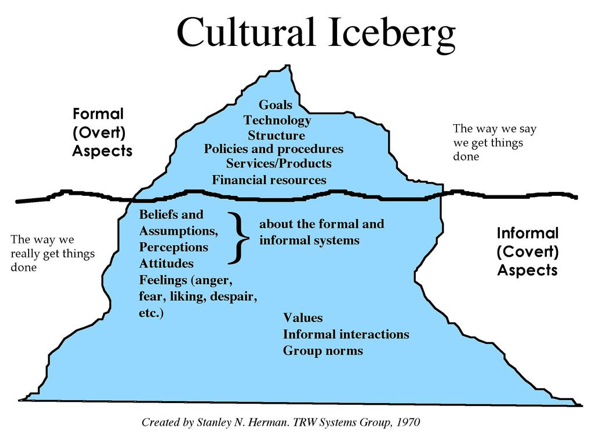
Most supermarkets including Sainsbury’s to perform wellin this competitive market are forced to change their strategies many times especially when managing organisational culture changes.  During transformation/changes, they are faced with two fundamental issues: integrating individuals into the workplace and adapting to the external environment (Armenakis & Bedeian, 1999).   It is possible to use Iceberg model to explain the culture change within Sainsbury’s (Figure 3).

Figure 3: Iceberg Model (Herman, 1970)

Organizations resemble puzzles which compose of various littles pieces that act as a whole.  Most top managers are aware of one-tenth of what is going on in the formal aspect or the way we say we get things done, and consequently fail to identify the bulk that is under water or the way we really get things done.  Usually, they cannot change what they do not understand.  This is an analogous to a ship heading for an iceberg whereby the long-term sustainability of an organisation relied heavily on the ability of leadership to realise how the organisation should think, feel, and act. As a consequence, they fail to implant necessary changes that have been implemented due to not understanding or acknowledge the basic assumptions in driving the culture.

The iceberg model emphasises on the importance of having a balance between formal and informal aspects of organizational culture.

4. Change of strategy in Sainsbury’s

Sainsbury’s began its operation officially in 1869, and been growing steadily over time.  Formerly known as J Sainsbury, in 2018 Sainsbury’s has 606 supermarkets, petrol stations and banks to be found around the Highstreets. Sainsbury’s include 817 Sainsbury’s local, 604 Argos stores, Sainsbury’s Online and Sainsbury Bank. (Sainsbury PLC, 2018 & 2019). 

Currently, Sainsbury’s employ over 185,000 colleagues who work hard every to make the customers’ lives easier and to provide them with great products, value for money, and service whenever it is convenient for them. (Sainsbury PLC, 2018 & 2019)

Based on Handy’s four types of organizational culture (1993), Sainsbury’s operated using a role culture which resembles a bureaucratic system whereby the employees are assigned with specific roles and responsibilities.  Due to the competitiveness of the market, Sainsbury’s has to adjust and move towards task culture where the employees are more flexible with more freedombeing provided (Handy, 1990). The mission of Sainsbury’s is to ensure that its employees feel valued and motivated. Sainsbury provides a Sainsbury’s Gift Card known as Nectar for employee reward and recognition of their good works and success (Deresky, 2017).  Currently, there are 19m collectors and considered the largest loyalty programme in the UK. (Sainsbury PLC, 2019)

5. Managing Culture Effectively

In managing culture effectively, the behaviours of leaders must be amplified and embedded in a network of organizational practices.  For any effective leadership, the followers tend to follow their leaders as an example. Sainsbury’s past strategies have been quite outdated; however, the new strategies alone are not enough for survival. Sainsbury’s introduction of employee reward and recognition of good work practice is a starting point to get everyone motivated.

Reference:

Armenakis, A. A., & Bedeian, A. G. (1999). Organizational change: A review of theory and research in the 1990s. Journal of management25(3), 293-315.

Deresky, H. (2017). International management: Managing across borders and cultures. Pearson Education India.

Deshpande, R., & Webster Jr, F. E. (1989). Organizational culture and marketing: defining the research agenda. Journal of marketing53(1), 3-15.

Handy, C. 1993, Understanding Organizations, Penguin, London. 

Herman, S. N. (1970). Cultural Iceberg. TRW Systems Group.

McNamara, C. (1999). General guidelines for conducting interviews.

Reference:

Sagiv, L., & Schwartz, S. H. (2007). Cultural values in organisations: insights for Europe. European Journal of International Management1(3), 176-190.

Sainsbury’s Annual Report. (2018).  Retrieved from https://www.about.sainsburys.co.uk/~/media/Files/S/Sainsburys/documents/reports-and-presentations/annual-reports/sainsburys-ar-2018-full-report.pdf

Sainsbury’s Annual Report. (2019).  Retrieved from https://www.about.sainsburys.co.uk/~/media/Files/S/Sainsburys/documents/reports-and-presentations/Sainsburys-Bank-AR19_FINAL4.pdf

Schein, E. H. (1990). Organizational culture (Vol. 45, No. 2, p. 109). American Psychological Association.

Website